Holborn Group Completes Downtown Vancouver Block Acquisition, Advances Supertall Tower Proposal
Key Takeaways
- What happened
- An affiliate of Holborn Group has acquired the office tower at 555 West Georgia Street, completing the assembly of the downtown block bounded by West Georgia and Dunsmuir streets.
- Location
- Global markets / U.S. (indirect for Metro Vancouver)
- Key points
-
- The completion of the land assembly and the formal rezoning submission represent a critical…
- Holborn acquired The Bay parkade and 500 Dunsmuir St. in 2006
- Demolition of the heritage building at 500 Dunsmuir St. ordered earlier this year
- Local impact
- Vancouver's downtown core has long been the focal point for high-density development, but the introduction of towers exceeding 300 metres marks a departure from the city's established vertical norms. The current tallest building in Metro Vancouver, Two Gilmore Place, stands at 218 metres. For Metro Vancouver buyers, sellers, developers and investors, watch financing cost, transaction pace, supply mix and policy expectations.
- Who should watch
- ['Monitor the rezoning public hearing outcomes closely, as they will set precedents for height and density approvals in downtown Vancouver.', 'Consider the impact of the 378 non-market homes on the broader rental market dynamics in the…



What Happened
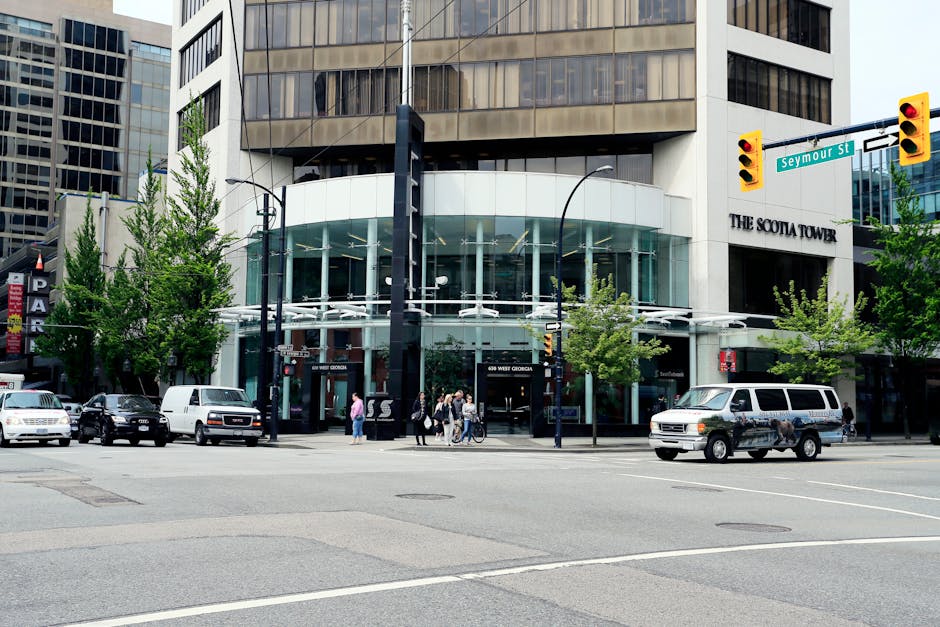
An affiliate of Holborn Group has acquired the office tower at 555 West Georgia Street, completing the assembly of the downtown block bounded by West Georgia and Dunsmuir streets. This acquisition marks the final step in securing the site that has been in development for nearly two decades. The purchase allows the developer to proceed with a massive rezoning proposal that includes three skyscrapers, the tallest of which would exceed 300 metres.
The submission of the first formal rezoning application for the project occurred last week, following the demolition of the heritage building at 500 Dunsmuir Street earlier this year. The proposal, designed by Henriquez Partners Architects, envisions a trio of towers on the parkade and former hotel block, alongside a separate 38-storey tower at 388 Abbott Street. Holborn Group President Joo Kim Tiah stated that the timing is now right to move forward after years of navigating city hall's previous rejections of earlier architectural designs.
The development aims to significantly alter Vancouver's skyline and housing supply. The West Georgia site would include 1,939 new homes, 64,000 square feet of retail space, and a 920-room hotel. The Abbott Street site is planned to provide 378 non-market homes. The tallest tower in the proposal would reach more than 300 metres, surpassing the current tallest building in Metro Vancouver, Two Gilmore Place, which stands at 218 metres.
Why It Matters
The completion of the land assembly and the formal rezoning submission represent a critical juncture for Vancouver's downtown development landscape. The project's scale and height introduce a new category of architecture to the city, potentially setting a precedent for future supertall developments. The inclusion of a substantial number of non-market homes and a large hotel adds significant public benefit components to the proposal, which may influence city council's evaluation of its impact on the neighbourhood.
The proposal's progression comes amidst a broader review of Vancouver's high-rise policies. The city council's decision last year to revise rules protecting public views has created a shifting regulatory environment for tall buildings. The outcome of this specific rezoning application will likely inform how the city balances the desire for increased density and iconic architecture with concerns about urban form and heritage preservation.
Local Vancouver / Burnaby Context
Vancouver's downtown core has long been the focal point for high-density development, but the introduction of towers exceeding 300 metres marks a departure from the city's established vertical norms. The current tallest building in Metro Vancouver, Two Gilmore Place, stands at 218 metres. The proposed 300-metre tower would not only be the tallest in the city but also in Western Canada, fundamentally reshaping the downtown skyline.
The site itself has a complex history. Holborn Group acquired the land at 500 Dunsmuir Street and the adjacent parkade in 2006. The heritage building on the site was emptied in 2013 and was later declared at risk of imminent collapse, leading to its demolition earlier this year. The acquisition of 555 West Georgia Street last year completed the block, allowing Holborn to present a unified development plan.
Local context also includes the city's ongoing review of its high-rise policies. The chief planner has proposed a 'Vancouver model' for future development, which emphasizes public space contributions and architectural quality. This review is critical for projects of this magnitude, as it will determine the specific requirements for setbacks, public plazas, and design standards that Holborn must meet to gain approval.
Market Impact
The introduction of a supertall tower and nearly 2,000 new residential units will add significant supply to the downtown condo and rental markets. The inclusion of 378 non-market homes at the Abbott Street site addresses specific affordability concerns, potentially influencing the broader market's perception of new developments in the area. The large hotel component may also impact the short-term rental market by providing alternative accommodation options.
For existing property owners in the immediate vicinity, the construction of such a massive project could temporarily affect views, sunlight access, and neighbourhood character. However, the long-term impact may include increased foot traffic and commercial activity, potentially boosting retail values in the surrounding blocks. The project's scale also signals continued investor confidence in Vancouver's downtown core despite broader economic uncertainties.
Investor / Buyer Takeaway
Monitor the rezoning public hearing outcomes closely, as they will set precedents for height and density approvals in downtown Vancouver. - Consider the impact of the 378 non-market homes on the broader rental market dynamics in the Downtown Eastside and adjacent areas. - Evaluate the long-term value implications of the new supertall tower on surrounding properties, particularly regarding view preservation and sunlight access. - Watch for changes in city policy regarding public space contributions and architectural standards that may affect future development feasibility. - Assess the potential for increased commercial activity and retail demand in the area due to the new residential and hotel population.
Builder / Developer Perspective
For developers, the Holborn proposal highlights the complexities of assembling large downtown sites and navigating evolving city policies. The nearly two-decade timeline underscores the patience required for major urban infill projects. The shift in city hall's stance, from rejecting earlier proposals to considering this one, suggests that developers may need to adapt their designs to align with current priorities, such as increased public benefits and heritage sensitivity.
The financial feasibility of such a project depends on the balance between high-value residential and hotel components and the cost of providing non-market housing and public amenities. The inclusion of a 920-room hotel also introduces operational risks and requirements that differ from standard residential developments. Developers must carefully weigh these factors against the potential for premium pricing in a market that is increasingly sensitive to supply and quality.
Risk Factors
Regulatory risk: The rezoning application may face delays or require significant modifications due to the city's ongoing high-rise policy review. - Market risk: Economic fluctuations could impact the absorption rate of the 1,939 new homes and the 920-room hotel, affecting project viability. - Construction risk: Building a supertall tower in a dense urban environment presents unique engineering and logistical challenges that could increase costs. - Community opposition risk: Neighbourhood concerns about the tower's height, shadow impacts, and construction disruption could influence political decisions. - Heritage risk: The demolition of the previous heritage building has already sparked debate; further controversies could arise during the construction phase.
BurnabyHouse Insight
The Holborn Group's move to complete its downtown block acquisition and submit a supertall tower proposal is a bold bet on Vancouver's future. It signals that major developers are willing to invest heavily in the city's core, despite the regulatory hurdles and market uncertainties. The project's success will depend on its ability to deliver on its promises of public benefits and architectural excellence while navigating the city's evolving high-rise policies. For local readers, this development is a key indicator of the direction Vancouver's downtown is heading, balancing growth with the preservation of urban character.
Community
Questions, Answers & Comments
Ask a question, add context, or leave a comment. Public posts appear after review.
No public questions or comments yet. Be the first to ask.