Canada’s Defence Trade Push Lands in the Dominican Republic
Key Takeaways
- What happened
- Canada’s government-to-government contracting agency, CCC, signed a Memorandum of Understanding (MoU) with the Ministry of Defence of the Dominican Republic on June 15, 2026.
- Location
- Ottawa, Ontario
- Key points
-
- The establishment of a dedicated G2G procurement pathway removes traditional bureaucratic…
- it creates a concrete mechanism for the Dominican government to purchase equipment, training,…
- June 15, 2026: CCC signed a Memorandum of Understanding (MoU) with the Ministry of Defence of…
- Local impact
- While this agreement is rooted in federal foreign policy and national security, it has indirect implications for the broader Canadian industrial base, including firms in British Columbia. For Metro Vancouver buyers, sellers, developers and investors, watch financing cost, transaction pace, supply mix and policy expectations.
- Who should watch
- - Defence sector investors should monitor CCC’s subsequent contract awards to Canadian firms for signs of sustained demand in the Caribbean.
Generating audio…


What Happened
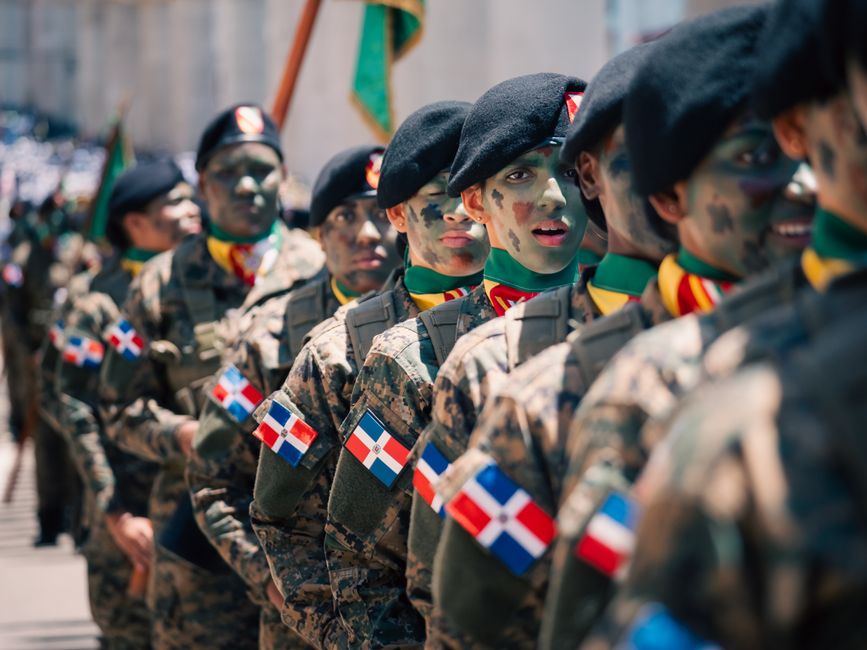
Canada’s government-to-government contracting agency, CCC, signed a Memorandum of Understanding (MoU) with the Ministry of Defence of the Dominican Republic on June 15, 2026. The agreement establishes a formal government-to-government (G2G) procurement pathway designed to help the Caribbean nation efficiently access high-quality Canadian defence goods and services. The signing was conducted by Kim Douglas, CCC’s Vice President of Business Development and Marketing, and Lieutenant General Carlos Antonio Fernandez Onofre, the Dominican Minister of Defence. Her Excellency Jacqueline DeLima Baril, Canada’s Ambassador to the Dominican Republic, witnessed the event, which was announced from Ottawa, Ontario. This move formalizes a new channel for bilateral defence trade, building on existing diplomatic ties that date back to 1954. The agreement signals a strategic effort to deepen security cooperation between the two nations through structured commercial relationships.
Why It Matters
The establishment of a dedicated G2G procurement pathway removes traditional bureaucratic friction, allowing the Dominican Republic to source Canadian military technology and support more directly. For Canadian defence firms, this provides a streamlined entry point into a market that has historically been difficult to navigate due to complex international contracting rules. This MoU is not just a symbolic gesture; it creates a concrete mechanism for the Dominican government to purchase equipment, training, and logistical support from Canadian suppliers. It reflects a broader Canadian government strategy to diversify defence export markets beyond traditional allies, leveraging CCC’s specialized role in facilitating these high-stakes government contracts.
Local Vancouver / Burnaby Context
While this agreement is rooted in federal foreign policy and national security, it has indirect implications for the broader Canadian industrial base, including firms in British Columbia. Canadian defence and aerospace manufacturers, many of which are headquartered or have significant operations in the Greater Vancouver area, stand to benefit from increased access to Caribbean government procurement. Historically, Canadian companies have relied on trade missions and diplomatic support to break into new markets, and CCC’s involvement accelerates this process. The Dominican Republic has also been a site for Canadian private sector development, such as the recent delivery of 200 apartments by CCC and Groupe Helios, indicating a growing commercial footprint. However, defence trade is distinct from residential real estate development; the two sectors operate under different regulatory and financial frameworks. For local investors, this highlights the strength of Canadian institutional exporters but does not directly impact local housing supply or zoning policies in Burnaby or Vancouver.
Market Impact
The immediate market impact is concentrated in the Canadian defence and aerospace sector rather than the real estate market. For defence contractors, the MoU represents a potential pipeline for future contracts, which could boost revenue and justify increased R&D or production capacity. For the broader economy, increased defence exports contribute to the trade balance and support high-skilled manufacturing jobs. There is no direct impact on Vancouver or Burnaby’s housing market, mortgage rates, or land values. However, the strengthening of bilateral ties may lead to increased business travel and corporate presence in both countries, indirectly supporting service sectors in major Canadian cities.
Investor / Buyer Takeaway
- Defence sector investors should monitor CCC’s subsequent contract awards to Canadian firms for signs of sustained demand in the Caribbean.
- Real estate investors should note that this is a federal trade development with no direct bearing on local housing affordability or supply.
- Business owners in export-heavy industries can watch for similar G2G agreements in other regions as a model for market entry.
- The Dominican Republic’s focus on defence modernization may eventually spill over into infrastructure and security-related real estate development.
- No immediate action is required for residential buyers or sellers in Metro Vancouver based on this specific announcement.
Builder / Developer Perspective
For residential and commercial builders in Burnaby and Vancouver, this MoU has limited direct relevance. The agreement focuses exclusively on defence goods and services, not construction or real estate development. However, the precedent of CCC facilitating large-scale projects in the Dominican Republic, such as the recent delivery of 200 apartments by CCC and Groupe Helios, shows that Canadian firms are active in the region’s development sector. Builders interested in international expansion may find the G2G model useful for navigating foreign government contracts, but the current MoU does not open doors for residential construction. Financing and permitting risks remain tied to local Canadian regulations and global supply chain costs, not Caribbean defence policy.
Risk Factors
- Geopolitical shifts in the Caribbean could alter defence priorities and procurement needs.
- Currency fluctuations between the Canadian dollar and the Dominican peso may impact contract profitability.
- Competition from other defence exporters (e.g., the United States, European nations) remains high in the region.
- Regulatory changes in Canadian export controls could affect the speed of goods delivery.
- Implementation delays in the G2G pathway could slow the realization of contract opportunities.
BurnabyHouse Insight
This MoU underscores a strategic pivot in Canadian foreign trade, moving beyond traditional allies to secure new markets for high-value exports. For Burnaby and Vancouver, the key takeaway is the role of federal agencies like CCC in de-risking international expansion for local companies. While defence trade is a niche sector, its success can bolster the broader Canadian economy, supporting jobs and investment in tech and manufacturing hubs like Metro Vancouver. Investors should view this as a signal of Canada’s active engagement in global security markets, which can create ripple effects for related industries, including cybersecurity, logistics, and infrastructure development. However, it does not change the fundamental dynamics of the local housing market, which remains driven by domestic demographics, interest rates, and zoning policies.
Community
Questions, Answers & Comments
Ask a question, add context, or leave a comment. Public posts appear after review.
No public questions or comments yet. Be the first to ask.