There’s a Bug in the Gold Trade as Miners Move Like Meme Stocks
Key Takeaways
- What happened
- Gold prices have surged approximately 14% so far this year, reaching levels just under $5,000 per ounce, yet the asset is exhibiting price volatility that analysts and investors are comparing to meme stocks rather than traditional safe-haven behavior.
- Location
- Global markets / U.S. (indirect for Metro Vancouver)
- Key points
-
- The increasing volatility in gold and bitcoin challenges their historic roles as reliable…
- The S&P 500 fell 2.6% before clawing back gains on Friday.
- Bitcoin fell around 20% and gold fell around 7%, then both recovered some gains.
- Local impact
- Macro data and market sentiment typically feed into rates, energy prices and financing expectations first, then into Canadian mortgage rates, development financing and Metro Vancouver housing supply, demand and pricing expectations.
- Who should watch
- - Buyers should focus on properties with strong rental yields and location fundamentals, as speculative assets like gold are showing meme-stock volatility.
Generating audio…



What Happened
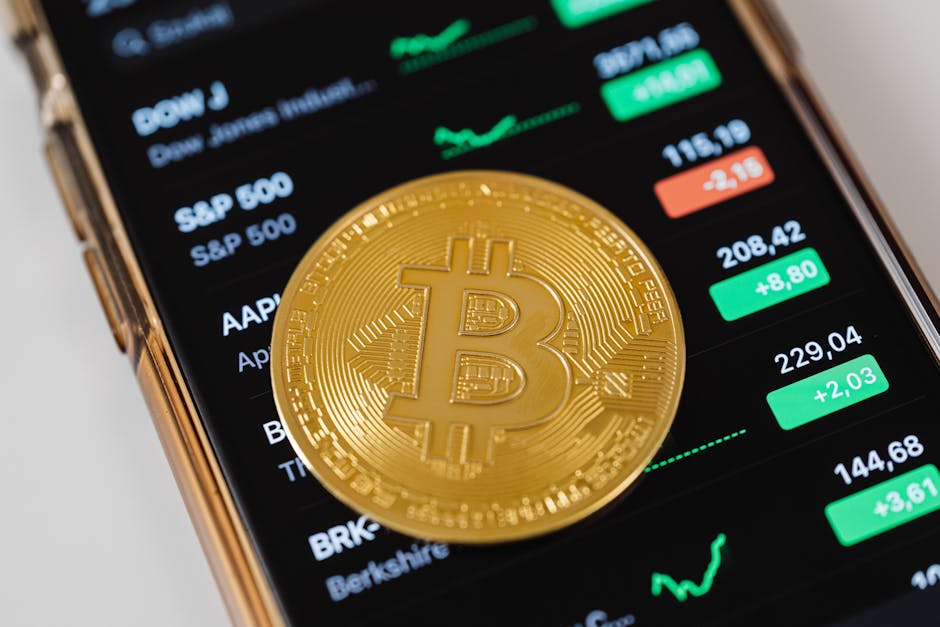
Gold prices have surged approximately 14% so far this year, reaching levels just under $5,000 per ounce, yet the asset is exhibiting price volatility that analysts and investors are comparing to meme stocks rather than traditional safe-haven behavior. This erratic movement was highlighted this week when the S&P 500 fell 2.6% before recovering on Friday, while gold and bitcoin both experienced significant swings, with bitcoin dropping around 20% to a low of $61,000 on Thursday before rebounding to $70,000 on Friday. Despite this recent turbulence, JPMorgan analysts have forecast that gold prices could climb to $6,300 per ounce by the end of the year, driven by anticipated demand from central banks and investors. The rapid rise in precious metals was described by one expert as "breathtaking and profoundly scary," underscoring the uncertainty surrounding the stability of these assets. Investors are currently divided, with some waiting out the volatility while others are buying the dip, as the cultural shift toward speculative trading influences market dynamics. Bitcoin, previously pitched as 21st-century digital gold, has fallen about 44% from its October peak, further challenging its role as a stable alternative store of value. The dollar appears relatively stable compared to the wild movements in gold and bitcoin, highlighting a divergence in asset performance. Diversification remains a key theme as investors grapple with the realization that traditional stores of value are no longer immune to speculative fervor.
Why It Matters
The increasing volatility in gold and bitcoin challenges their historic roles as reliable stores of wealth and hedges against geopolitical instability or fiat currency debasement. When safe-haven assets behave like meme stocks, investors lose a critical tool for portfolio stability during economic uncertainty. This shift forces a reevaluation of diversification strategies, as assets previously considered low-risk may now carry high speculative risk. The divergence between the dollar's stability and the volatility of precious metals and cryptocurrencies suggests a complex market environment where traditional correlations are breaking down. Investors must navigate a landscape where the "new gold" is more volatile than the old, requiring more active management and risk assessment. The potential for continued price swings, even amid a forecasted rise to $6,300 per ounce, means that gold may offer returns but not necessarily stability. This environment benefits those who can time the market but penalizes those seeking predictable preservation of capital. The situation underscores the importance of understanding the underlying drivers of asset prices, such as central bank demand and geopolitical tensions, rather than relying on historical labels like "safe haven." As the market evolves, the utility of gold as a stable store of value diminishes, forcing a shift in how wealth is protected and grown.
Local Vancouver / Burnaby Context
In the Greater Vancouver real estate market, where property values are often influenced by broader economic indicators and currency fluctuations, the volatility in gold and bitcoin serves as a barometer for investor sentiment and risk appetite. While the provided source does not directly link these financial trends to local housing data, the stability of the U.S. dollar relative to gold and bitcoin can impact cross-border investment flows into Canadian real estate. Historically, periods of fiat currency debasement or geopolitical uncertainty have driven interest in hard assets, including real estate, as a hedge. However, the current meme-stock-like behavior of gold suggests that even traditional hedges are subject to speculative swings, which may complicate long-term investment planning for Vancouver buyers and sellers. Local context from BurnabyHouse historical articles highlights the importance of understanding local market drivers, such as zoning changes and development approvals, alongside global financial trends. For instance, the recent approval of the Sunborn floating hotel near the Vancouver Convention Centre and the subsequent legal challenges by Unite Here Local 40 demonstrate how local policy decisions can create distinct market dynamics independent of global financial volatility. Similarly, the confirmation of Kevin Warsh as the next Federal Reserve Chair, succeeding Jerome Powell, introduces potential shifts in U.S. monetary policy that could affect mortgage rates and housing affordability in Canada. These local and national factors often outweigh the immediate noise of global commodity markets in determining real estate outcomes. Investors in Burnaby and Vancouver must therefore balance global financial signals with local regulatory and development realities, recognizing that while gold may be volatile, local housing markets are shaped by a unique mix of supply constraints, zoning rules, and demographic trends. The cultural shift toward speculative trading seen in gold and bitcoin may also influence investor behavior in real estate, with some potentially seeking higher-risk, higher-reward opportunities in development or short-term rentals, while others retreat to stable, long-term holdings. Understanding this interplay is crucial for navigating the current market environment.
Market Impact
The volatility in gold and bitcoin may lead to increased caution among investors regarding alternative stores of value, potentially driving capital back into traditional assets like equities or real estate if they are perceived as more stable. For the condo market, this could mean a shift in buyer priorities toward properties with strong fundamentals and location value, rather than speculative investments. Land value and redevelopment feasibility may be influenced by the cost of capital and investor risk tolerance, with higher volatility potentially leading to more conservative financing. Mortgage rate sensitivity could increase if the Federal Reserve's policy shifts, as indicated by the appointment of Kevin Warsh, lead to changes in interest rates. Neighbourhood sentiment may reflect a broader market uncertainty, with buyers and sellers waiting for clearer signals before making major financial decisions. Market liquidity could be affected as investors reposition their portfolios, potentially leading to short-term fluctuations in transaction volumes.
Investor / Buyer Takeaway
- Buyers should focus on properties with strong rental yields and location fundamentals, as speculative assets like gold are showing meme-stock volatility.
- Sellers may find that pricing strategies need to be more flexible, as market sentiment can shift rapidly with global financial news.
- Investors should diversify across asset classes, recognizing that traditional hedges like gold are no longer immune to speculative swings.
- Watch for changes in U.S. monetary policy following the appointment of Kevin Warsh, as this could impact mortgage rates and housing affordability in Canada.
- Be cautious of high-risk investments in development or short-term rentals, as the cultural shift toward speculative trading may lead to increased market instability.
Builder / Developer Perspective
Builders and developers may face increased scrutiny on financing and construction costs as investors become more risk-averse due to market volatility. The potential for higher interest rates, driven by Federal Reserve policy shifts, could impact the cost of capital for new projects. Pre-sale strategies may need to be adjusted to account for buyer caution, with a greater emphasis on transparency and value proposition. Rental economics could be influenced by changes in demand patterns, as investors reevaluate their portfolios. Policy execution issues, such as zoning changes and development approvals, remain critical for project feasibility, regardless of global financial trends. The stability of the U.S. dollar relative to gold and bitcoin may also impact cross-border investment in Canadian real estate, influencing developer strategies for marketing and sales.
Risk Factors
- Policy changes in U.S. monetary policy could lead to higher mortgage rates, impacting housing affordability and demand in Canada.
- Increased volatility in global markets may lead to reduced investor confidence in real estate as a stable asset class.
- Zoning and regulatory changes in Burnaby and Vancouver could impact development feasibility and project timelines.
- Financing risks may increase as lenders become more cautious in a volatile economic environment.
- Insurance and licensing costs for development projects may rise, impacting overall project economics.
BurnabyHouse Insight
The meme-stock behavior of gold signals a broader market shift where traditional safe havens are losing their stability, forcing investors to look elsewhere for protection. In Burnaby and Vancouver, this means that real estate remains a critical asset class, but its value is increasingly tied to local fundamentals rather than global financial trends. The recent approval of the Sunborn floating hotel and the legal challenges it faces highlight the importance of local policy in shaping market outcomes. Similarly, the appointment of Kevin Warsh as Fed Chair introduces uncertainty that could impact mortgage rates and housing affordability. Investors must navigate this complex landscape by focusing on properties with strong rental yields and location value, while remaining cautious of speculative risks. The cultural shift toward speculative trading seen in gold and bitcoin may also influence investor behavior in real estate, with some seeking higher-risk opportunities and others retreating to stable holdings. Understanding this interplay is crucial for making informed decisions in the current market environment.
Community
Questions, Answers & Comments
Ask a question, add context, or leave a comment. Public posts appear after review.
No public questions or comments yet. Be the first to ask.